
- This event has passed.
Technical Meeting On Opportunities For Use Of Nuclear Techniques To Build Evidence On Food Contaminants, Food Safety And Human Nutrition Inter-linkages

A Technical Meeting (TM) took place from 8th to 10th July 2025, with a goal to review the use of nuclear techniques to understand the inter-linkages between food-borne hazards and nutrition outcomes in the context of complex food systems, as well as to identify opportunities for synergies for coordinated research and actions among UN agencies involved in this area, namely, FAO, IAEA and WHO. The technical meeting brought together a multi-disciplinary team of experts to synthesize evidence on food contaminants and residues of public health interest and evidence on how exposure impacts human nutrition.
Speaking during the forum, H.E. Dr. Joyce G. N. Kithure highlighted the role of nuclear analytical techniques in detecting and monitoring food contaminants such as persistent organic pollutants (POPs), aflatoxins, and heavy metals in food products.

She noted that the application of advanced scientific methods is essential for ensuring that food consumed by citizens meets national and international safety standards.
“Scientific tools and evidence-based approaches are critical in identifying contaminants in our food systems and safeguarding the health of our communities,” she stated.
H.E. Dr. Joyce G. N. Kithure underscored that food contamination remains a major concern in Kenya, particularly due to the presence of toxins such as aflatoxins and fumonisins in staple foods.

She explained that studies conducted in various urban centers including Nairobi, Kisumu, Nakuru, Eldoret, Nyeri, Kitale, and Mombasa have revealed contamination in common food products sold in supermarkets and markets.
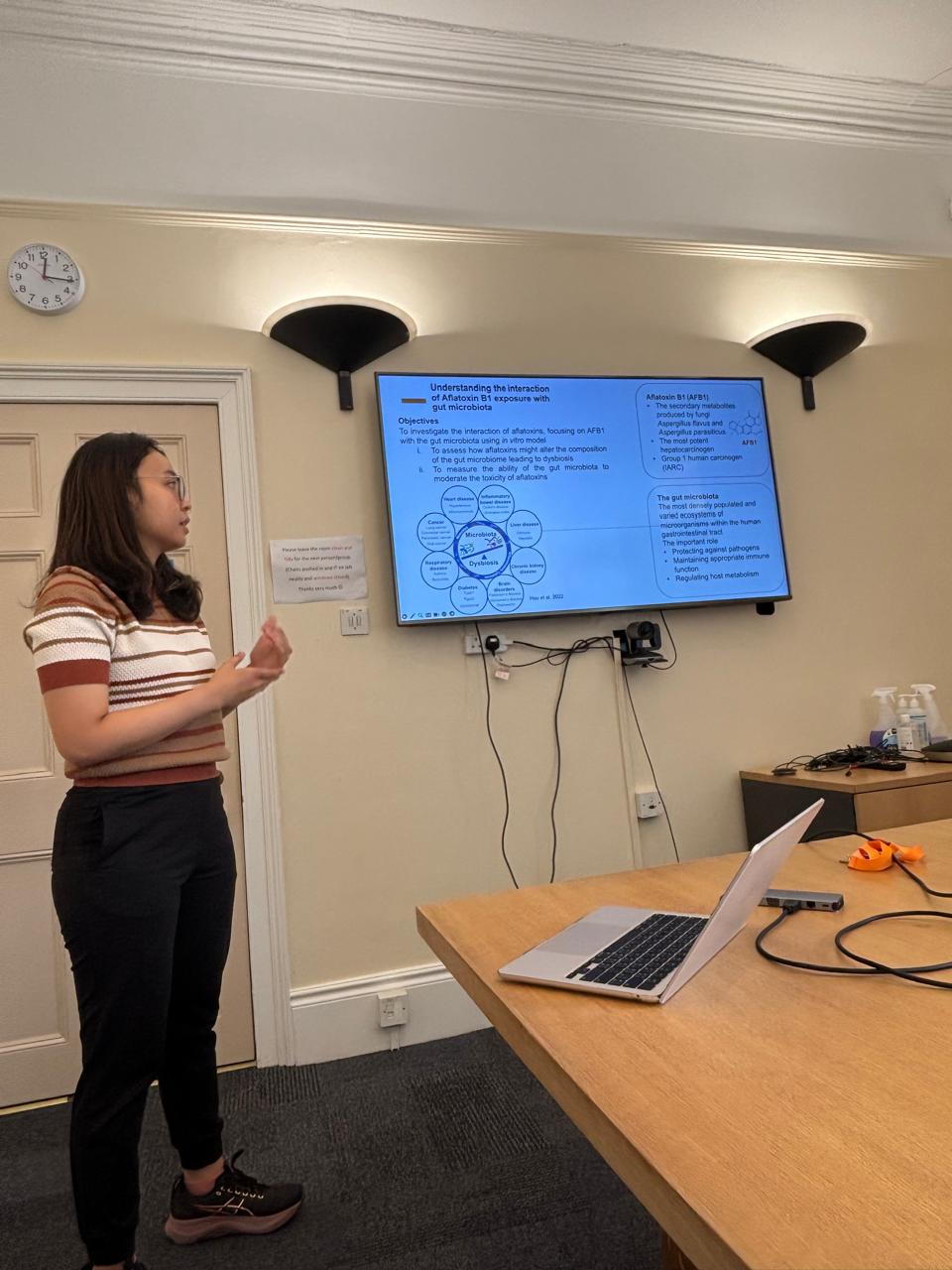
According to H.E. Dr. Joyce G. N. Kithure, aflatoxins—produced by fungi such as Aspergillus flavus and Aspergillus parasiticus—are frequently detected in staple foods including maize, peanuts, milk, and animal feed.
“These toxins are known to cause serious health effects, including liver damage and cancer, making it essential to strengthen monitoring and regulatory systems,” she noted.
H.E. Dr. Joyce G. N. Kithure further explained that nuclear analytical techniques provide reliable and accurate methods for detecting contaminants at very low concentrations, enabling scientists to assess the safety of food products with greater precision.
She noted that these techniques allow researchers to trace the presence of harmful substances across the food chain and evaluate environmental sources of contamination.
“These technologies enhance our ability to detect toxins, monitor pollution, and develop strategies to prevent harmful exposure to communities,” she said.

H.E. Dr. Joyce G. N. Kithure highlighted that the persistence of food contaminants in Kenya is influenced by several factors including poor post-harvest handling, inadequate storage systems, limited regulatory enforcement, and climatic conditions that promote fungal growth.
She emphasized that strengthening surveillance systems, improving storage infrastructure, and increasing public awareness are critical steps in mitigating food contamination risks.
“Addressing food contamination requires a coordinated effort among scientists, policymakers, farmers, and public health institutions,” she stated.
H.E. Dr. Joyce G. N. Kithure also stressed the importance of continuous research and collaboration among universities, laboratories, and international scientific institutions in order to enhance Kenya’s capacity to monitor environmental pollutants and food contaminants.

As a senior lecturer in environmental chemistry, she encouraged young scientists and students to pursue research that contributes to food safety, environmental protection, and sustainable agricultural systems.
“Scientific research must serve society by providing practical solutions that protect human health, strengthen food systems, and promote sustainable development,” she said.
H.E. Dr. Joyce G. N. Kithure concluded by reiterating that science-driven interventions remain essential in protecting communities from harmful environmental exposures and ensuring that food production systems remain safe, sustainable, and resilient.
She called for increased investment in scientific infrastructure, research capacity, and training programs to support the next generation of scientists working to address food safety challenges in Kenya.
“Through science, innovation, and collaboration, we can build safer food systems and healthier communities for present and future generations,” she added.
H.E. Dr. Joyce G. N. Kithure also visited the Kenyan Embassy in Vienna, Austria.


Event Gallery